It’s a brisk December morning in Lexington, Kentucky. It’s almost Christmas 2004, and whilst most locals are busy driving to finish their shopping and visit their families, nineteen-year-old Chas Allen is driving somewhere else. His route leads him through roads, which, for several months now have been ingrained into his mind. Every turn, junction, and traffic light has been memorised. On route to his destination, Chas collects three of his high school friends, although right now, high school friends may not be the wisest words to say out loud in public. From here on, they’re acquaintances, associates, colleagues, and they’re all dressed as old men.
“Our geriatric disguised foursome ambles across the campus lawn like a posse in a slow-motion film scene. Several students glance up from the pages of their schoolbooks and observe us – four men in cheap tweed suits walking side by side with bizarre limps – with curiosity. I feel their eyes lingering on us as we continue forward.”
In a borrowed family car with a substitute licence plate, Chas drives the four faux-pensioners to Lexington’s esteemed Transylvania University. This institution boasts a rich and proud reputation of historical importance; however, their visit doesn’t coincide with the education on offer. Instead of learning from the seminal, original prints of John James Audubon and Charles Darwin, the four old men desire the prints themselves. The knowledge the four men seek cannot be read or taught, but only learnt through actually crossing the line themselves, pioneering themselves into a one-of-a-kind experience which will isolate them from everyone else. Through a unique combination of initiative, near-perfected strategy and boldness, balanced with misguided, misplaced and delusional bravery, the four men will change their lives forever.
It all sounds terribly dramatic, and that’s because it is. This is something that they’re each fully aware of as they continue to educate themselves on how to pull off the perfect heist through watching heist movies. Throughout Evolution: Becoming a Criminal, Chas’s wonderful, autobiographical retelling of his partaking in these events, he carefully navigates scenes of action, adventure and espionage with a lack of exaggeration or bending of the truth, and the result is a story that could very well pass for that; a story. But this is an essential entry into tales that fit the adage “you couldn’t make this up”.
“A wild mixture of emotions courses through my body. Euphoria, excitement, the pang of guilt, and the small but persistent voice of fear for my own safety vie for dominance within my thoughts.
But mostly, I feel the thrill of the heist.”

Image Credit: Los Angeles Times
Evolution: Becoming a Criminal is a blisteringly honest retelling of how pressure, guilt, and exasperated desperation can amount to hostile action. However, it’s not as easy as it may seem to merely dismiss the four counterparts as your average, senseless criminals. Sure, in the basement of their rented home, the four did conspire a plan to rob millions of dollars of artwork and actually follow through with it, but until now, they had only petty crimes under their belts. Therefore, it would be safe to say that it was ambitious, a hell of a step up for even the most advanced criminal. Utilising heist films as their study material, Chas worked tirelessly to perfect a heist that could set them each back a hefty few million dollars. But were they ever that serious about it as they fantasised and hypothesised, swapping hand-drawn blueprints around the room for bong hits?
This question of legitimacy is a major theme of American Animals (dir. Bart Layton, 2018), a wonderfully unique and exceptionally crafted documentary/drama hybrid about the misfortunate heist which has since been branded as one of the wildest and most audacious in American history. Directed by Bart Layton, the film reprises attention to the events of 2004, intricately illustrating the themes of maximised first world problems, bored privilege and existentialism. In the film, the distribution of responsibility between the four is still an active question with an unclear answer. Where one claims to have had no part in the initiation of the heist is parried by another, stating that he, in fact, was the one who planted the seed and began hinting at the idea. American Animals is also game-changing in how it incorporates the four real-life counterparts, blending scenes with themselves and the actors that are playing them. Driven by the fluctuating rhythm of their juxtaposing, individual recollections of their responsibilities, the film acts as a mystery as much as it does a dramatic documentary thriller. Chas has managed to write a piece that heftily contributes to the lore of the story, whilst further exploring the roots of his descent into criminality. It also charts the beginning of his ascent to where he is now with an open-minded and humble, accountable empathy.
“I feel as though my life story is intertwining with the history of the book and with all the great men and women from past generations who once held the same treasure in their hands. The sensation feels like being a part of history, now, in the present.
A hollow, empty feeling creeps into my sense of awe and wonder. I didn’t earn my place in history. I stole it.”
Hamish Gough (HG): Evolution acts, at times, as a life-guide book, taking a very strategic and objective approach to how we can better ourselves and overcome adversity. When you decided to write a memoir, did you ever consider writing an almost guide-like advice book or did you know from the start that you wanted it to be detailed, intimate and personal?
Chas Allen (CA): I did. Ultimately though, the expression in sharing the story of my younger self was two-fold. First, writing and sharing my experiences in an intimate way fostered healing and growth cathartically toward fully embracing my story and living my truth to overcome deeply rooted shame. Shame that I felt for committing a crime and going against who I believed myself to be at my in-most core. Second, I chose to share lessons experienced through story rather than a how-to expression because my intention was to lay down my armor and my weapons and stand in my vulnerability, inviting anyone who may relate to the suffering and pain I experienced to feel safe and emboldened to explore their suffering, knowing they are not alone. Knowing freedom and love exist on the other side of hate and suffering.

Image Credit: Pop-culturalist
Chas has written his heist counterparts under the guise names of Ethan, Luke and Devon. The heist would see the four men attempt to steal the books situated in the Special Collections room of Transylvania University’s library. Their first attempt would employ Ethan’s artistic abilities, in which he’d try his hand at make-up and prosthetics to disguise them as elderly men. Ideally, their plan would see them arrive at their booked appointment, unnoticed, to view the seminal books on offer, including John James Audubon’s The Birds of America and Charles Darwin’s Origin of Species. Once inside, they’d then be able to access the under lock-and-key treasures. The elephant in the room, however, was in that: the lock and key. Inevitably, one of them would have to access that key, which would be under the close supervision of librarian, Anita Bonner (also a guise name).
The attempt was a failure. Before even reaching the room, the four soon realised that their costumes were attracting the polar opposite of their intentions. Their flaky make-up, comically stereotypical garments and unpractised, forced geriatric limping garnered more attention than their plan to blend into the old-as-they-look surroundings. With staff and students studying the strange men instead of their reading, most likely expecting some prank or flash mob dance to unfold instead of a multi-million dollar heist attempt, the faux-elders panickily head for a spare room for an unplanned team meeting. The conclusion was to call it quits. And that was the conclusion to their journey into the extraordinary. Until the next day.
This time, the outfits are no more. Ethan keeps a lookout from the roof of a nearby building. Devon and Luke will be going inside to represent the fictional characters who have booked to view the collection. Devon will neutralise the librarian and call Luke when Bonner has been dealt with, as nobody else wants any part in that. Chas is still the appointed getaway driver, but this time, he’ll stay in the car with the engine running. In Evolution, Chas displays his strength at writing with versatility. The passage perfectly embodies the obvious and expected sense of dread, anxiety and paranoia; the scene is set in a frozen space of time despite the immediate, every-second-counts urgency of the situation and his every action, decision and move. It’s not dissimilar to classic sporting tales, where massive durations of time are spent in preparation for an event that could only last minutes and have historical, never-forgotten impacts. Another major strength of Evolution is in its ability to be relatable, despite being largely unique and outrageous to most of us. Chas’ story is never perceived as absurd or otherworldly. The actions of the four are not only written engagingly within the realms of being believable but also at a wholly understandable level. Chas reasons his integration with the plot to steal millions as, overall, an unshakable desire to escape.
HG: In American Animals, one of your heist counterparts’ states that there was this “desire for some sort of life-altering experience”. He refers to artists like Monet and Van Gogh as understanding “something more about life” that he wasn’t getting to experience. Did you have a similar outlook? Were there any equivalent figures in your life of people that understood something about life that you didn’t?
CA: For me, I wanted an escape. The pain I was experiencing after the death of a close
friend, my parents’ divorce, and the dissolution of my hopes and expectations for
my future when I felt betrayed by a family member, became unbearable. I
experienced so much pain and anger at the time. I felt hopelessly alone in my
suffering, without any understanding of how to heal those wounds or even seek a
healthy outlet such as therapy because in Southern culture any type of counselling
or therapy was looked down upon, or even shameful. When I chose to participate
in the heist, I had reached a point that I didn’t care anymore what happened. I just
wanted things to be different. Whether we got away with it or got caught, I knew
everything would change. Anything other than the pain I felt was welcome.
With wisdom and heart, Chas is able to recognise value in not only the silver-linings of the hardships that life can offer but the positivity in the journey to discover them. Another theme of Evolution is in how to deal with unfortunate circumstances and how one can effectively approach negativity. We’ve all felt in our lives that the odds are sometimes stacked against us, whether the issues are trivial, or as monumental as life and death. Sometimes it feels all too calculated, as though some greater power is actively coordinating your misfortune, repaving a once-content path into one filled with confusion and paranoia. This is a quintessential part of the evolution process, according to Chas, in embracing your issues and working towards nurturing yourself. It means not to dismiss your flaws, but to acknowledge and take responsibility of them, to assess them in the context of self-criticism which is not harmful but constructive.
“Though I’ve come to understand that my rapid evolution as a person was a result of complex, confusing and often hurtful events – many of which happened in a relatively short period in my life – I’ve come to one abundantly clear conclusion about myself at that time: I was an arrogant, little s**t”
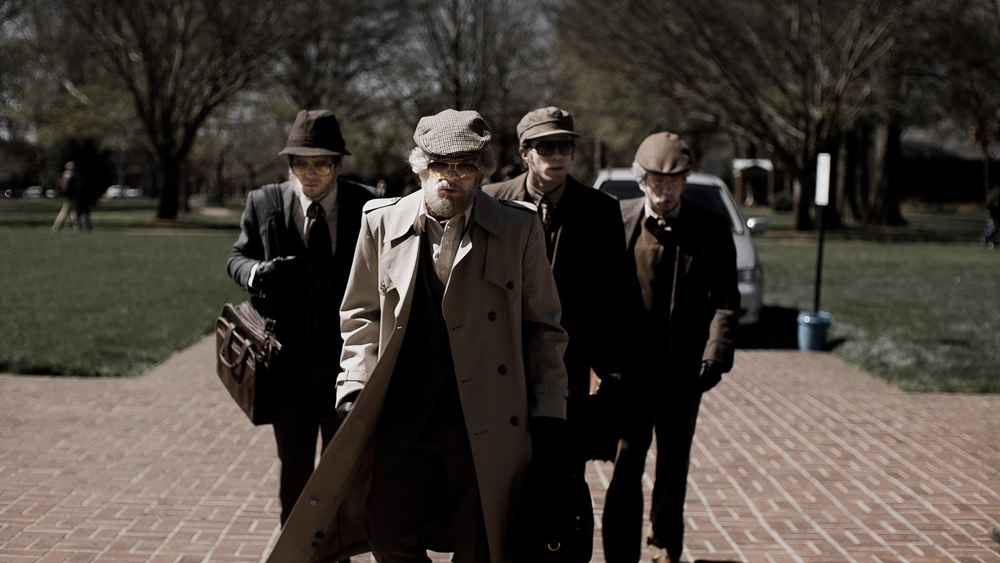
Image Credit: Teahub
However, to allow for healthy self-criticism, an equal measure of empathy and acceptance is also required. Chas takes full responsibility for his criminal actions that caused upset to those close to him and those affected during the heist and, admirably, is able to discuss his weaknesses and insecurities that amounted to this. The sudden death of a close friend, the separation of his parents and subsequent awkward deterioration of his relationship with his father (who he was also business partners with), each play monumental parts in the formation of Chas’ desire to change his life.
HG: Of course, we learn a lot from our setbacks and failures, but too many
setbacks without any successes can lead to demotivation and giving up.
What advice would you give to people who are currently in that position?
CA: Every setback contains a lesson, if we’re open to it. In experiencing setbacks, I
would suggest asking oneself, is what I desired to achieve through a “successful
outcome” in alignment with who I am? To use the example of the heist that I
participated in, the “failure” allowed me to reassess what I was seeking to gain,
and why, and then do some soul searching to explore whether a failure may have
actually been a success after all. More in alignment with self. This process of
alignment begins by committing to 100% honesty in our lives. With ourselves and
with others. All the time. When our lives are organized by truth and clarity in our
intentions and actions, alignments for successful directions and realignments in
setbacks become readily available to us.
The second heist went down as, as far as heists are concerned, a relative success, if executed haphazardly by the skin of their teeth. As Chas waited outside in the car, contemplating everything in his recent life that led him to this moment, Devon and Luke remarkably success in the Special Collections Room. Although insisting that he’d do it alone, Luke was mortified upon entering the room to find Anita still blissfully unaware of their intentions; in other words, Devon hadn’t neutralised her. Now with an accomplice to support him, his stun gun, some cable ties and a balaclava, Devon and Luke apprehend her. In a frenzied panic, the two load their backpacks with some smaller literary artefacts before carrying not one but two of the weighty and sought after The Birds of America. Outside…
“A thought crosses my mind. I can drive away right now. I can put this whole heist right here in the rearview mirror and never look back”
… but before he’s able to act on this, a frantic and wild Devon and Luke launch through the fire exit, a second librarian hot on their heels. Chas thinks fast and drives even faster, improvising on the plan fixated in his memory. With the passenger door open, Luke is able to propel himself into the minivan, deserting the pursuing librarian, turning her into a mere panicked, flailing bystander. Devon also re-joins them by leaping into the moving vehicle, to which the plan can more or less continue as planned. Before Chas can proceed as “normal” though, two things interrupt him: an about-to-vomit-everywhere Devon and something missing, something large.
“I check the rearview mirror. No police lights flashing. No sirens. No alarms. My voice barks toward Mr. Black and Mr. Yellow, “So, what happened? Where are the Audubon books?”
Impressively, they escape more or less unscathed, if a little shaken, but without one major component: the Audubon’s. They were dropped amidst the chaos, but this didn’t stop them from fleeing with the books in their backpacks, which were still potentially worth millions of dollars. In Evolution, Chas intricately details their blatant paranoia and increased sense of surveillance. They knew that they had gotten away with it, but it was almost too good to be true.
However, the fatal flaw that ended their transition to becoming millionaires was self-inflicted. A mere, human error mistake that allowed them to be traced after booking a valuation at a high-end New York auction house with the same details that were used to book the appointment at the library put a halt to both their criminal saga and their lives as they knew it. Woken by the butt of a shotgun slamming against his door, a night-time siege saw the downfall of the thieves, as Chas’ home was located and invaded by the FBI. Chas, Ethan, Devon and Luke were each set to serve seven years in jail.
Chas’ estranged father drives them both down memory lane, literally, past places they grew up, naturally allowing them both to reflect on these unexpected, out-of-the-ordinary events. The journey culminates at Chas’ new home for the next seven years, prison, which then leads to a gut-wrenching depiction of the self-surrender, the seemingly nonchalant and casual transition from one long day of surreal, apprehensive panic and paranoia into seven years of imprisonment. Unusually, however, Chas notes finally feeling alive. Ultimately though, and surprisingly, we’re left with a sense of tragedy, as though this was a mistake, that none of this should have happened.
““This is Chas Allen. I’m here to self-surrender. Hello?” I hold my breath, hoping the silence will never end. That somehow this is all a mistake”
Naturally, a question most of us jump to ask is “why?” especially when one seemingly has the odds on their side in life. Chas illustrates his answer in the most effective way possible, with the utmost respect and active consciousness to his decisions. If you attempt to treat your flaws and actions with self-loathing and hatred, there’s little chance you’ll nurture anything and may instead enable and further your own self-destructivity. Chas reflects on the personal self-hatred he experienced when he felt he was too deep in the plot to quit.
HG: There’s a recurring phrase you use towards the end of Evolution, which is
“I hate what I have become”, “I hate what I see”, “I hate everything” etc.
Tragically, many people relate to this self-hatred on varying levels, from
day-to-day life to major incidents and events. How did you change this
negative perspective you had of yourself, and what advice could you offer
to those suffering?
CA: Suffering, in my experience, is rooted in denial. We all will experience pain in some
degree throughout life, suffering though, is a choice. Suffering is a denial of the
pain that seeks expression. Hurt people hurt people, seeking a connection with
others to make sense of and feel with our pain. It is up to us to choose a nurturing,
healthy outlet for that expression, or to choose a destructive means of expression,
as I did in committing a crime. What was helpful and even transformative for me
when experiencing my deepest sense of suffering was to face it directly. In
Evolution, the confrontation of the suffering within occurs as an encounter in a
jail cell mirror, seeing myself and actually looking at what has become of my life.
Some would call such an experience, “rock bottom.” From that humbling place, I
didn’t attempt to escape my pain. I recognized it, felt it, embraced it, and let my
pain flow in tears. Even such a simple expression and acknowledgement of that
suppressed pain allowed a new space to open and a slow redirecting of course to
steer my life toward a healthy direction of growth.
Chas’s story is as thought-provoking as it is irresistibly thrilling. Chas, Ethan, Devon and Luke each served their full 87-month sentences and were released in 2013. Filmmaker Bart Layton reached out to the men whilst they were serving their sentences and began to craft the ambitious concept for his film, which would premiere in 2018 as American Animals. The Sundance premiere of the film would be the first and only time the four would reunite since prison. The film boasts a powerful conclusion, revealing where the four are now and what they are doing with their newfound freedom. In its tragedy, it’s also a strangely triumphant and life-assuring climax to a tale of a misplaced, criminal ambition and insatiable appetite to control your life, to be recognised and appreciated but simultaneously be devoid of all attention, desiring only to escape and leave a mark on the world. In Evolution, Chas explores this and remarks on how they collectively shared this desire. In conclusion, I asked Chas about his thoughts on this era’s ever-present persistence on staying pro-active and the collective millennial necessity to constantly be progressing your career and lifestyle.
HG: I think today, there’s this huge mounting pressure to be pro-active and
productive all the time, especially with young people, and that failure to
do so means an uncertain and not-so-bright future. Is this something
you’ve recognised, and if so, what is your stance on it?
CA: This notion of productivity and success that one can validate with external
achievements, status, material possessions, etc. will never, in my opinion, deliver
us to where we intend. New expectations and new obligations to measure
ourselves against will continue to rise just beyond our grasp. If we meet the
expectations, momentarily we stand upon a mountaintop and bask in the glory.
Yet, like Sisyphus, we become doomed to fall from such heights, only to again
push uphill, seeking to stand in the glow of validation once more. Each of us
experiences such pressures in ways as unique as our individual lives may be. The
root though, in my experience, originates in the notion of external validation.
When we feel pressure to be productive and achieve, etc. a helpful question for
ourselves may be, what am I trying to prove? And to whom? We all have those
forces in our lives. For me, my father was such a force. I sought to be loved in the
fullness of who I am, however, I found myself pushing to achieve new levels of
success to win his validation, which in a conditional sense, I equated to love.
Understanding this source of approval, allowed me to recognize how this
foundational belief was manifesting itself through seemingly all relationships and
pursuits. Rather than seeking external validation, seeking full expression of self in
our authenticity shifts that external pressure we feel. It dissolves it. Because
suddenly, we have nothing to prove. We step out of the conditional love pattern
and into unconditional love. With unconditional love, we are driven from within.
Driven to grow and share and relate and help one another, in any direction we
may choose.
The tale told in Evolution is an extraordinary and arguably paradoxical transition into adulthood. In order to grow and, as the title suggests evolve, the four were so driven and compelled to fulfil their mutual ambition and cross that line that it became inevitable. Once the ball was rolling, the heist would become absolute, and the four would change everything for themselves, Anita, their families and their friends. Chas’ choice of the title Evolution is masterful in its subtlety. The process of bettering oneself is long and ever-changing, and even with missteps with dire consequences, continuous growth is attainable if we can learn from those mistakes and proactively channel a positive, forgiving and responsible outlook. It’s in how we choose to reflect and adapt along the way if we wish to improve ourselves. However, it’s essential that we do not dismiss our negative actions so that we do not repeat them. There’s an enigmatic sense of relatability to be found in reading Evolution, one which makes you question your stance on the daily influx of news articles we are bombarded with. Scarcely is crime randomly generated within a person; there’s most often a plethora of determining factors and external influences. Chas utilises his contemplative abilities to assess the causes of his decisions and accept responsibility for what he has done, and in doing so, assist in aiding others that are similar.
Since his release from prison, Chas has become an author, a motivational speaker and a personal trainer.
You can order Chas’ book Evolution: Becoming a Criminal here:
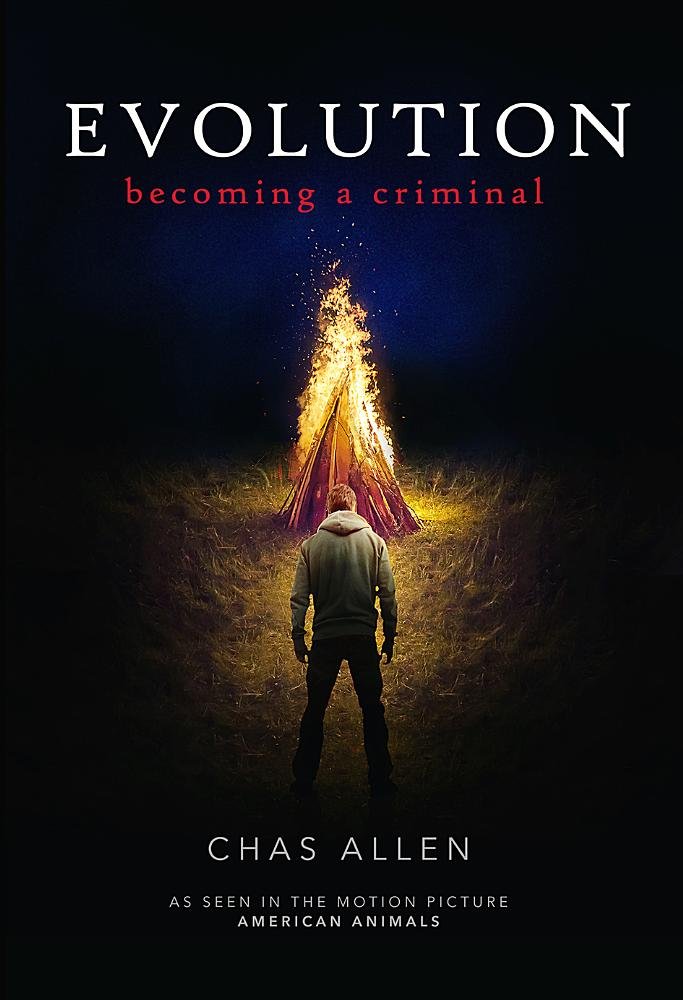
Image Credit: Amazon
Writer’s note:
American Animals is one of those rare films that I became obsessed with before even seeing it. I just knew that I’d fall in love with it, and I did. Seeing such a unique genre hybrid was one thing, but the way that such an outrageous story was portrayed in such a relatable and empathetic manner was another.
I got in touch with Chas in April 2019, about a year after seeing the film for the first time. I knew that I wanted to further investigate the journey of the characters, so I read on the story extensively, discovering interviews and articles from numerous sources. When I came across Chas’ book Evolution: Becoming a Criminal,I ordered it immediately, excited to gain yet another inside perspective of the same events, having already read Eric Borsuk’s awesome retelling, also entitled American Animals.
Chas was immediately positive about the project and was flexible and willing to aid me in this praise of his work. Considering I had no previous examples of investigative work to present to him, Chas was still keen to help me on my journey to better my skills as a writer. I would like to thank Chas sincerely for generously granting me his time to participate in this project. It’s been massively exciting to collaborate on a written piece with somebody whose creative outlook I admire. I’d also like to thank him for his patience whilst I took my time to write this throughout 2020, a turbulent and unpredictable year.

 filmmish